How to Choose the Right Trench Shoring System for Your Excavation
A trench shoring system affects how excavation work is planned, how workers access the trench and how plant moves around the site. The equipment needs to fit the excavation design and the intended work sequence. Choosing a system from a product name alone can leave important site constraints unresolved.
Mabey supplies hydraulic, modular, steel and aluminium shoring systems for civil construction work. Each serves a different purpose. The best starting point is a clear excavation brief and early discussion with the people responsible for equipment and temporary-works design.
Quick Answer
Start with the excavation dimensions, ground information, service locations and planned work sequence. Hydraulic shoring can suit constrained trench work. Modular systems can assist with changing layouts. Steel and aluminium shields can provide protected working space for different requirements. Mabey can review the brief before equipment is booked.
Trench Shoring Selection Criteria
Record trench width, depth and the working space required inside the excavation. Include the work itself. Pipe installation, service repairs and connection work can each need different clearance for people, tools and materials.
The area around the trench also forms part of the decision. Spoil placement, nearby structures, existing services and plant access may affect delivery and installation. Mabey’s engineering team can use this information to discuss suitable hire and design support.
Hydraulic Vertical Shoring for Constrained Trenches
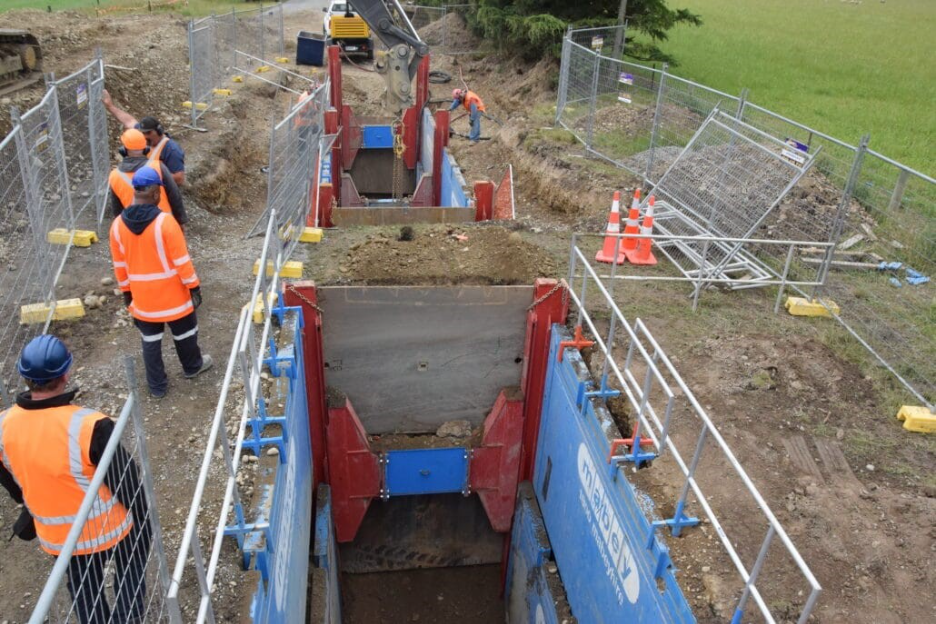
Hydraulic vertical shoring supports trench walls through hydraulic pressure. Mabey describes its system as an aluminium option that can be installed and removed from above ground.
Picture a utility repair in a narrow corridor. Existing services may limit the room available for larger equipment, while the work still needs a protected area for the repair team. Hydraulic shoring may be considered where the approved design and site conditions support that approach.
The installation sequence needs attention. Establish where the system will be placed, how it will be adjusted and what plant is available nearby. A Mabey representative can review the excavation brief before hire is confirmed.
Modular Trench Shoring for Changing Layouts
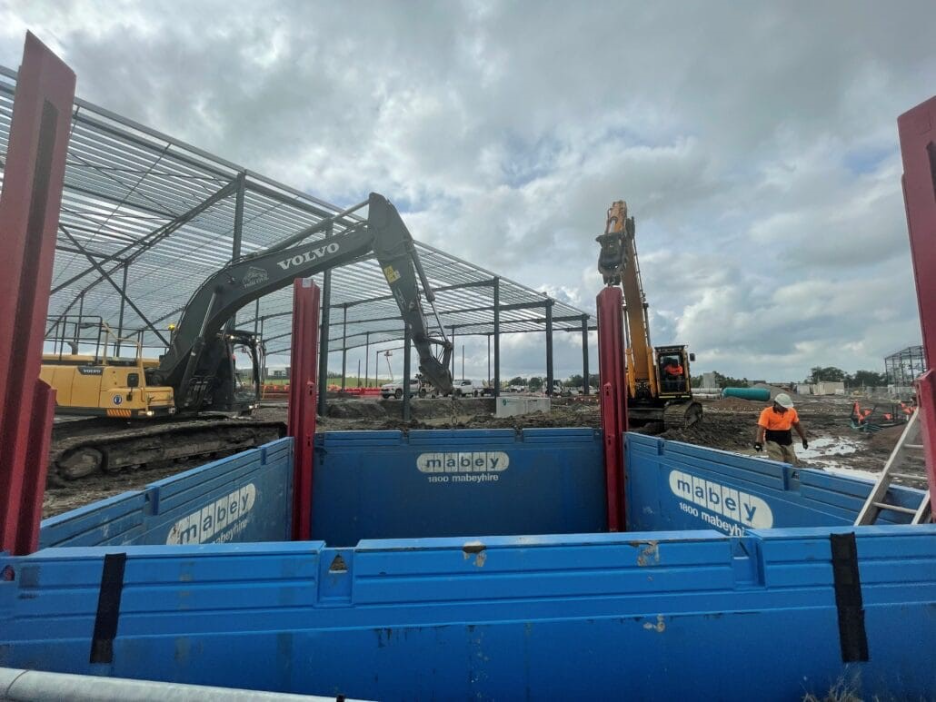
Modular trench shoring uses aluminium panels and corner posts to create adaptable support arrangements. Mabey offers two-way and three-way corner-post options.
This can assist when the excavation is more complex than a straight trench. Intersecting services, changing trench geometry and pipework continuing through the excavation may all influence the configuration.
Drawings are valuable at this stage. They show where workers require space, where services pass and how the excavation changes along the work front. The final configuration should follow the project design and approved installation method.
Steel and Aluminium Shield Options
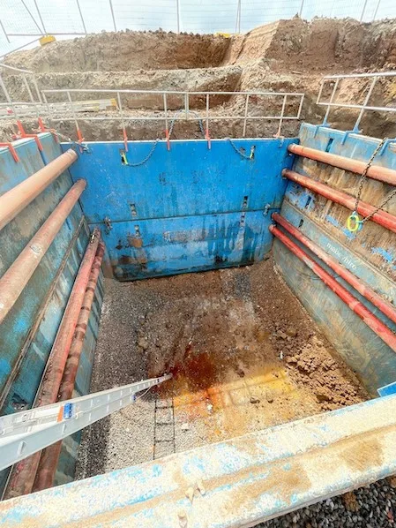
Heavy-duty steel trench shields are designed for demanding excavation applications and greater internal working space. Ultra Shields provide a lightweight trench-box option, while Versa Shield is Mabey’s drag-capable aluminium trench shield.
The working area often drives the choice. Larger pipework or repair activities may need greater clearance. For linear pipe work, the shield may need to move as installation progresses. That makes plant access, spoil placement and available room beside the trench important considerations.
Mabey can discuss hire availability, handling requirements and the proposed operating method with the project team.
Comparison Guide
| System | Project Consideration | Mabey Support |
| Hydraulic vertical shoring | Constrained trench work | Equipment and engineering discussion |
| Modular trench shoring | Changing layouts or cross utilities | Configuration review |
| Steel or aluminium shields | Working clearance and handling needs | Hire and operating-method guidance |
Talk to Mabey About Your Trench Shoring Project
Choosing the right system starts with a clear picture of the excavation, including dimensions, ground conditions, services and the work sequence. Mabey’s team can help match the equipment to the site and provide engineering support where required.
Talk with Mabey about this project
Frequently Asked Questions
What should be included in a shoring enquiry?
Provide excavation dimensions, drawings, ground information, service locations, access constraints and the planned work sequence.
Can Mabey help before equipment is booked?
Yes. Mabey Engineering Services can assist with temporary-works design support where required.
Can one system suit every excavation?
No. Equipment selection needs to reflect the excavation design, site conditions and approved installation method.
Can shoring requirements change during the project?
They can. Changes to the excavation, services or work sequence should be reviewed before equipment is used in a new arrangement.